
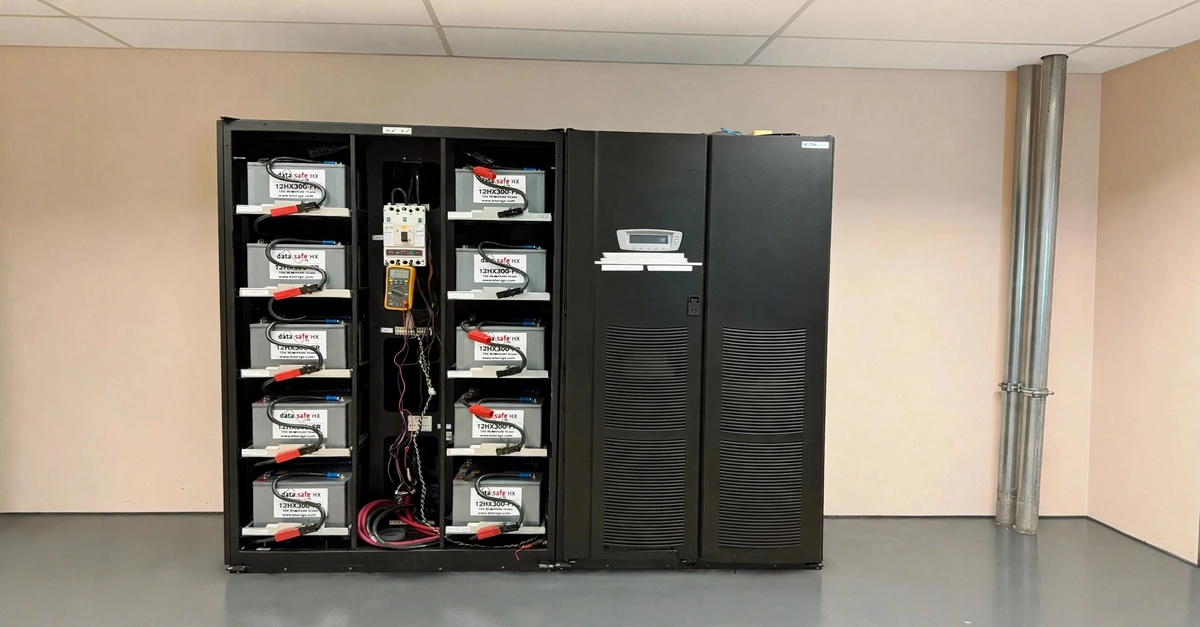
UPS batteries are one of the most critical components of an uninterruptible power supply (UPS) system. Even when a UPS appears to be operating normally, aging or deteriorating batteries can significantly reduce backup runtime and create a risk of unexpected power loss.
Professional UPS battery maintenance and replacement services help organizations identify battery problems early, maintain reliable backup power, and replace batteries before they become a critical failure point.
Why UPS Battery Maintenance Is Important
A UPS system can only provide backup power for as long as its batteries can safely deliver the required energy. Battery performance gradually decreases because of age, temperature, charging conditions, operating environment, and normal chemical degradation.
Regular maintenance helps identify:
· Reduced battery capacity
· Weak or failing battery blocks
· Abnormal battery impedance
· Swollen, leaking, or damaged batteries
· Loose or corroded connections
· Abnormal battery temperatures
· Charger or charging-system problems
· Insufficient backup runtime
· Batteries approaching their expected service life
Identifying these conditions early can reduce the risk of UPS battery failure during a utility outage.
What Is Included in UPS Battery Maintenance?
Professional UPS battery maintenance should evaluate both the batteries and the environment in which they operate.
Depending on the UPS system and battery technology, maintenance may include:
Battery Visual Inspection
Technicians inspect batteries for physical damage, swelling, leakage, corrosion, damaged terminals, and other visible abnormalities.
Battery Impedance Testing
Battery impedance testing can help identify batteries whose internal condition has deteriorated. Comparing individual battery measurements can help technicians identify weak batteries before they cause a battery-string failure.
Voltage Measurements
Individual battery or block voltages can be measured to identify abnormal readings and potential charging or battery problems.
Connection Inspection
Battery terminals and interconnections are inspected to identify loose connections, corrosion, overheating, or other conditions that could affect battery performance.
Temperature and Environmental Inspection
Temperature has a significant effect on battery life. Excessive heat can accelerate battery degradation, making environmental inspection an important part of UPS battery maintenance.
UPS Charging-System Assessment
The UPS charging system should also be evaluated to verify that the batteries are receiving appropriate charging conditions.
Battery Replacement Planning
Maintenance results can be used to determine whether batteries should continue operating, be monitored more frequently, or be replaced.
When Should UPS Batteries Be Replaced?
UPS batteries should not be replaced based solely on age. Battery condition, operating environment, testing results, manufacturer recommendations, and the required level of backup reliability should all be considered.
For many UPS applications using valve-regulated lead-acid (VRLA) batteries, replacement planning commonly becomes important after several years of service. However, actual battery life can vary significantly depending on temperature, charging conditions, discharge cycles, and installation conditions.
A UPS battery replacement may be recommended when:
· Battery testing indicates deteriorated performance
· Backup runtime is below the required level
· Multiple batteries show abnormal test results
· Batteries have reached the end of their expected service life
· Physical damage, swelling, or leakage is observed
· The UPS reports battery-related alarms
· A planned replacement is more appropriate than waiting for failure
UPS Battery Replacement Services
Professional UPS battery replacement involves more than simply installing new batteries. The replacement process should be planned to maintain system safety, compatibility, and reliability.
A typical UPS battery replacement service may include:
1. Reviewing the UPS model and battery configuration
2. Confirming battery specifications and compatibility
3. Isolating the battery system according to the appropriate procedures
4. Removing existing batteries
5. Installing the replacement batteries
6. Inspecting and tightening battery connections
7. Verifying battery polarity and configuration
8. Checking charging voltage and UPS battery status
9. Clearing or verifying battery alarms where applicable
10. Performing appropriate functional or battery testing
11. Removing and properly disposing of the replaced batteries
Battery replacement should be performed by qualified technicians because UPS battery systems can contain significant stored electrical energy and can present electrical, arc-flash, and short-circuit hazards.
Choosing the Correct UPS Replacement Battery
Using the correct replacement battery is essential. Battery specifications should be verified against the UPS manufacturer's requirements and the existing system configuration.
Important considerations include:
· Battery voltage
· Amp-hour capacity
· Battery dimensions
· Terminal configuration
· Battery technology
· Discharge characteristics
· Operating temperature
· Manufacturer compatibility
· Quantity of batteries required
· UPS battery-string configuration
Replacing batteries with an incompatible model can affect charging, runtime, performance, and overall UPS reliability.
Should You Replace One UPS Battery or the Entire Battery Set?
In many UPS systems, replacing only one failed battery may not be the best long-term solution, particularly when the batteries are part of the same string and have similar ages.
If one battery has significantly deteriorated, other batteries of the same age may also be approaching the end of their useful life. Replacing the complete battery set can provide more consistent performance and reduce the risk of additional battery failures shortly after the initial repair.
The appropriate strategy depends on the UPS design, battery configuration, test results, battery age, and manufacturer's recommendations.
UPS Battery Preventive Maintenance
Preventive battery maintenance is particularly important for critical applications such as:
· Data centres
· Healthcare facilities
· Telecommunications systems
· Industrial facilities
· Financial institutions
· Manufacturing facilities
· Commercial buildings
· Emergency and life-safety systems
· Network and IT infrastructure
For critical loads, waiting until a battery alarm or utility failure occurs can create unnecessary operational risk. A planned maintenance and replacement strategy allows organizations to identify battery deterioration and schedule replacement before battery failure affects critical equipment.
Professional UPS Battery Maintenance and Replacement in Canada
Hatch Power provides UPS battery maintenance and replacement services in Canada, helping organizations maintain the reliability of their critical backup power systems.
Our services can include battery inspection, battery testing, impedance testing, battery replacement, battery-system assessment, and maintenance recommendations for UPS installations.
Whether a UPS system requires routine battery maintenance, investigation of a battery alarm, or complete battery replacement, a professional assessment can help determine the appropriate solution based on the condition of the existing battery system.
Conclusion
UPS batteries are a critical part of any backup power system, and battery failure can prevent a UPS from providing the expected protection during a power interruption.
Regular UPS battery maintenance and replacement services help identify deterioration, verify battery condition, plan replacement, and maintain dependable backup power.
For organizations that depend on continuous power, proactive battery maintenance is not simply a maintenance task—it is an important part of overall UPS reliability and business continuity.
.png)


