
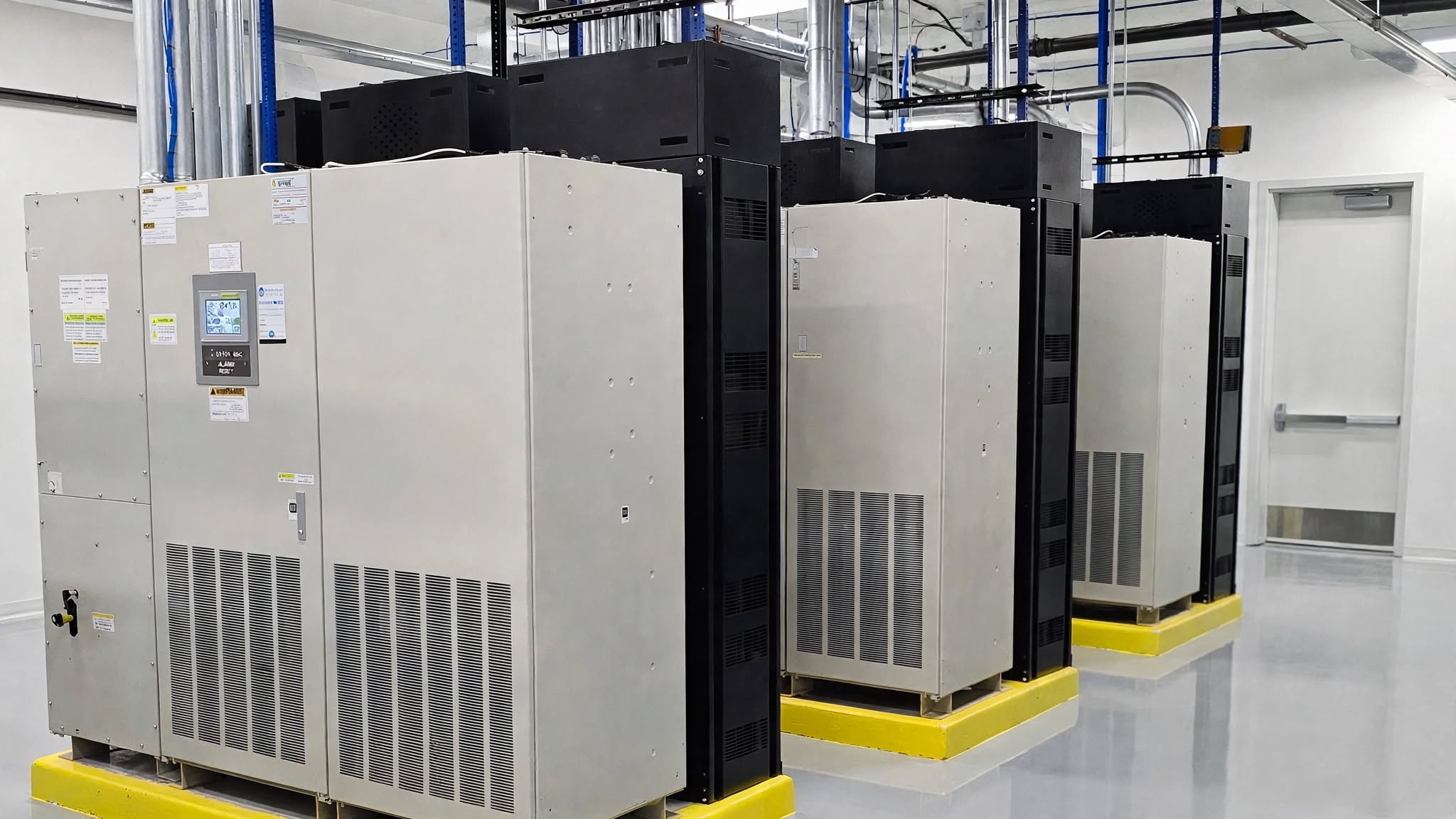
An aging Uninterruptible Power Supply (UPS) can become one of the most critical decisions for a facility: Should the existing UPS be repaired and maintained, or is it time to replace the system?
There is no single age at which every UPS must be replaced. A well-maintained UPS may continue operating reliably beyond its typical service life, while another unit may become economically or technically unsuitable much earlier.
The right decision depends on the age, condition, technology, availability of spare parts, battery condition, operating environment, maintenance history, and required level of reliability.
What Is the Typical Serviceable Life of a UPS?
The serviceable life of a UPS depends heavily on its design and operating conditions.
As a general guideline:
· Small UPS systems: approximately 5–10 years
· Commercial and industrial UPS systems: approximately 10–15 years
· Large critical-power UPS systems: often 10–15+ years with appropriate maintenance and component replacement
However, the UPS batteries normally have a much shorter life than the UPS itself. Depending on battery technology and operating conditions, VRLA/AGM batteries may require replacement several times during the life of the UPS.
Therefore, an old UPS should not automatically be considered obsolete simply because its batteries have reached the end of their life.
When Does an Old UPS Become Difficult to Service?
The most important question is not simply:
"How old is the UPS?"
A better question is:
"Can this UPS still be reliably supported for the next several years?"
An older UPS becomes increasingly difficult to justify when critical replacement components are no longer readily available.
These components may include:
· Power semiconductor modules
· Capacitors
· Cooling fans
· Control boards
· Communication boards
· Display/control panels
· Contactors and relays
· Static switches
· DC capacitors
· AC capacitors
· Battery breakers and disconnects
· Proprietary electronic components
If the manufacturer has discontinued the model and replacement boards or power modules are no longer available, even a relatively minor failure can result in extended downtime.
Battery Replacement Does Not Necessarily Mean UPS Replacement
One of the most common mistakes is assuming that an old UPS must be replaced simply because its batteries need replacement.
The batteries are a consumable component and normally require periodic replacement.
Before replacing the entire UPS, it is important to determine:
1. Is the UPS still supported by the manufacturer or a qualified service provider?
2. Are critical spare parts available?
3. Has the UPS experienced recurring failures?
4. Are capacitors and cooling fans still within acceptable condition?
Depending on the application, an assessment may include:
· Visual inspection
· UPS alarm and event history
· Load measurements
· Input and output voltage
· Input and output current
· Frequency
· Power factor
· THDi and THDv
· DC bus measurements
· Battery voltage
· Battery internal resistance/conductance
· Battery temperature
· Charger performance
· AC/DC ripple measurements
· Capacitor condition
· Cooling fan condition
· Power semiconductor condition
· Static bypass operation
· Maintenance history
· Spare-parts availability
· Manufacturer support status
· Efficiency evaluation
· Remaining service-life assessment
The objective is to determine the actual condition and remaining practical service life of the UPS.
Repair, Refurbish, or Replace?
There are generally three options when dealing with an aging UPS:
Repair
Repair may be appropriate when the UPS is relatively healthy, parts are available, and the expected remaining service life justifies the investment.
Refurbish or Modernize
Some UPS systems can be upgraded or partially modernized.
This may include replacing aging components, upgrading controls, improving monitoring, replacing fans and capacitors, or upgrading the battery system.
Replace
Replacement becomes more attractive when the UPS is obsolete, unreliable, inefficient, unsupported, difficult to repair, or no longer suitable for the facility's power requirements.
The Bottom Line
There is no universal maximum age for every UPS system.
A UPS should not be replaced simply because it reaches a particular birthday. At the same time, continuing to repair a 15- or 20-year-old UPS without evaluating its reliability, supportability, efficiency, and remaining service life can expose a facility to unnecessary risk.
The best approach is to perform a professional UPS condition and lifecycle assessment before making the decision.
The key question is not:
"How old is my UPS?"
It is:
"Can my UPS reliably support my critical load for the next several years, and is continued investment in this equipment technically and economically justified?"
For critical power systems, making that decision before a failure occurs can mean the difference between a controlled modernization project and an unexpected shutdown.
How Hatch Power Can Help
Hatch Power provides UPS consulting, maintenance, testing, power-quality assessment, and UPS lifecycle evaluation to help commercial and industrial facilities determine whether an aging UPS should be repaired, refurbished, or replaced.
A proper assessment can help identify the condition of the UPS, batteries, power electronics, capacitors, cooling system, and overall power-quality performance—providing a technical basis for the next investment decision.
Don't wait for an old UPS to fail. Assess its condition, determine its remaining serviceable life, and plan the next step before reliability becomes an emergency.
.png)


