
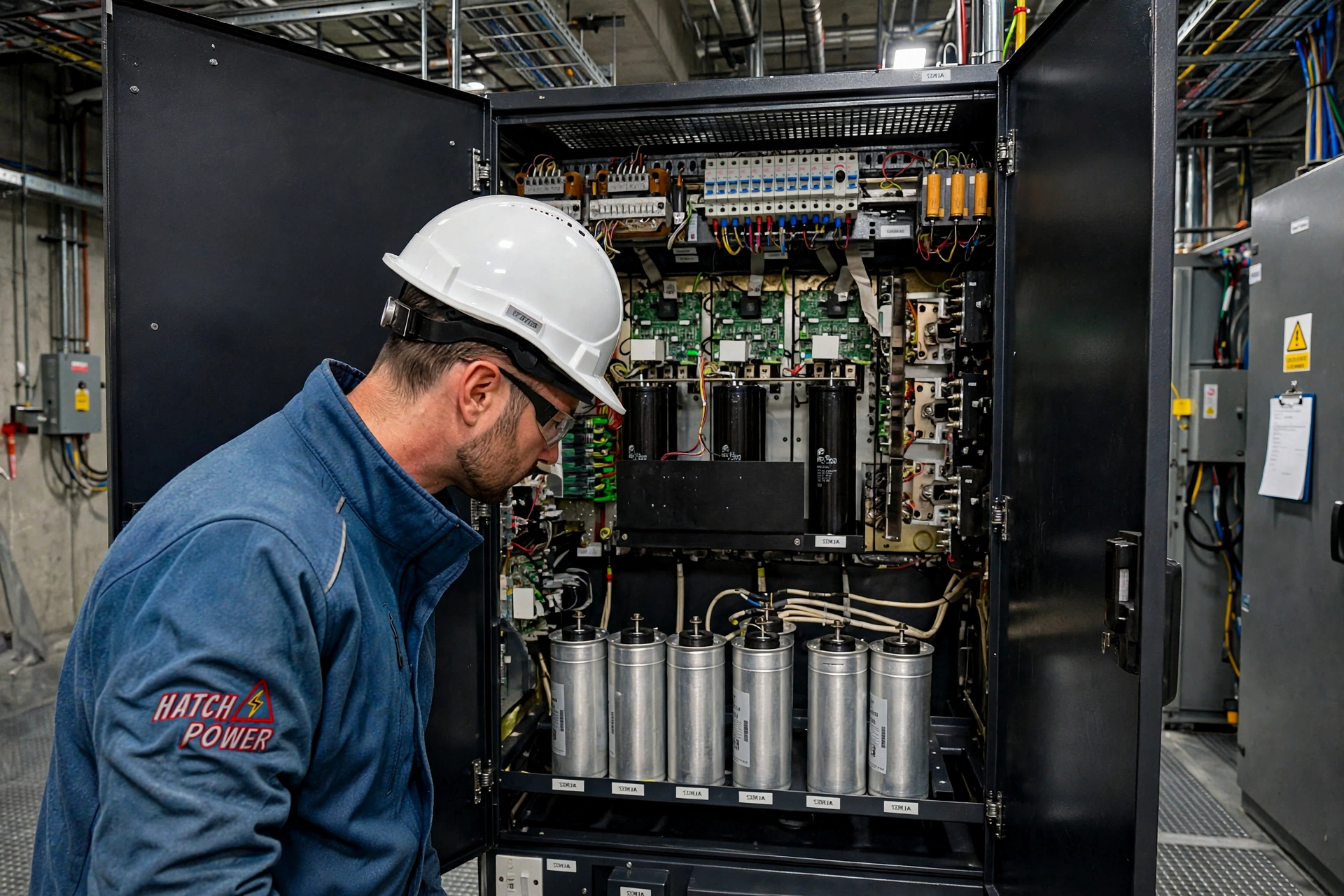
UPS systems are critical to the operation of data centers, healthcare facilities, industrial plants, telecommunications infrastructure, commercial buildings, and other mission-critical environments. Because a UPS contains high-voltage electrical components, stored energy, batteries, capacitors, and potentially high fault currents, maintenance must be performed with a strong focus on personnel safety and system reliability.
Proper UPS maintenance is not simply about keeping equipment operational—it is about ensuring that technicians can work on the system safely while minimizing the risk of electrical incidents, equipment damage, unexpected downtime, and loss of critical loads.
1. Only Qualified Personnel Should Perform UPS Maintenance
UPS maintenance should be performed only by personnel who are appropriately trained, qualified, and authorized to work on the specific equipment.
Technicians should understand:
· UPS topology and operating modes
· Electrical hazards and stored energy
· Battery systems and associated risks
· Manufacturer maintenance procedures
· Lockout/tagout requirements
· Emergency procedures
· Applicable electrical and workplace safety requirements
A technician should never assume that a UPS is safe simply because it appears to be turned off
2. Understand the UPS System Before Starting Work
Before beginning maintenance, technicians should review the UPS design and determine how power flows through the system.
This may include:
Utility → Input Switchgear → Rectifier → DC Bus → Inverter → UPS Output → Critical Load
Depending on the installation, the system may also include:
· Static bypass
· Maintenance bypass
· External battery cabinets
· Battery disconnects
· Input/output breakers
· Distribution panels
· Generator connections
· Parallel UPS systems
· Redundant power paths
Understanding these paths is essential because multiple sources of electrical energy may remain present even when the UPS inverter is switched off.
3. Follow Lockout/Tagout Procedures
Lockout/tagout (LOTO) is one of the most important safety controls when performing electrical maintenance.
Before working on equipment, qualified personnel should follow the site's approved procedure to:
1. Identify all energy sources.
2. Shut down the equipment according to the manufacturer's procedure.
3. Isolate the appropriate electrical sources.
4. Apply locks and tags as required.
5. Control stored energy.
6. Verify that the equipment is de-energized.
7. Perform the maintenance only after the safe condition has been established.
Never rely solely on a UPS display, indicator light, or software status to confirm that equipment is de-energized.
4. Verify the Absence of Voltage
One of the most important principles of electrical safety is:
Test before you touch.
After isolation, qualified personnel should use appropriately rated test equipment to verify the absence of hazardous voltage at the points where work will be performed.
The test equipment itself should also be verified according to the applicable safety procedure.
This step is particularly important because UPS systems can contain multiple energy sources and stored electrical energy.
5. Be Aware of Stored Energy
Even after incoming power is disconnected, a UPS may contain stored electrical energy.
Components such as:
· DC bus capacitors
· AC capacitors
· Batteries
· DC links
· Internal power electronics
can remain energized for a period of time.
Technicians must follow the manufacturer's specified discharge and waiting procedures before accessing internal components.
Never assume that capacitors or other components are safe to touch immediately after shutdown.
6. Take Battery Safety Seriously
UPS batteries can present significant hazards.
Depending on the battery technology, risks can include:
· High short-circuit current
· Electrical shock
· Arc flash
· Thermal hazards
· Chemical exposure
· Battery leakage
· Fire
· Explosion from accumulated gases in improperly ventilated environments
Before performing battery maintenance, technicians should understand the battery type, configuration, voltage, capacity, isolation method, and manufacturer's safety requirements.
Battery terminals should never be short-circuited with tools or conductive objects.
7. Use Appropriate PPE
Personal protective equipment (PPE) should be selected based on the hazards identified for the specific task and site.
Depending on the work, PPE may include:
· Safety helmet/hard hat
· Safety glasses or face protection
· Electrical-rated gloves
· Protective footwear
· Arc-rated clothing
· Hearing protection
· Other task-specific protective equipment
PPE is an important layer of protection, but it should not replace proper isolation, engineering controls, and safe work procedures.
8. Maintain a Safe Work Area
The area surrounding the UPS should be clean, dry, well illuminated, and free of unnecessary equipment or obstacles.
Technicians should also:
· Keep unauthorized personnel away from the work area.
· Maintain required electrical clearances.
· Prevent tools from falling into equipment.
· Keep liquids away from electrical components.
· Use appropriate insulated tools where required.
· Maintain clear access to emergency equipment.
Good housekeeping can significantly reduce the possibility of accidental contact, short circuits, trips, and other incidents.
9. Be Careful When Working Around Live Equipment
If energized work is permitted under applicable regulations and site procedures, it should only be performed by appropriately qualified personnel using the required controls.
Live electrical work should never be treated as routine.
Before performing any task near energized equipment, technicians should understand:
· Shock hazards
· Arc-flash hazards
· Approach boundaries
· Required PPE
· Equipment ratings
· Safe work procedures
· Emergency response requirements
Where possible, de-energization is the preferred approach.
10. Follow the Manufacturer's Maintenance Procedure
Different UPS systems have different architectures, components, shutdown sequences, bypass configurations, and maintenance requirements.
Therefore, technicians should always consult the manufacturer's documentation for the specific UPS model.
Maintenance procedures may include inspection and testing of:
· Fans
· Filters
· Capacitors
· Power modules
· Connections
· Breakers
· Control systems
· Batteries
· Battery connections
· Cooling systems
· Alarms
· Bypass systems
Improvising procedures on a mission-critical UPS can create unnecessary safety and reliability risks.
11. Check the Bypass and Redundancy Configuration
Before maintenance, technicians need to understand whether the critical load is being supplied through:
· UPS inverter
· Static bypass
· Maintenance bypass
· Another parallel UPS
· A redundant power path
Incorrect bypass operation can create serious consequences, including unexpected loss of power to the critical load.
For redundant UPS systems, the maintenance plan should clearly identify which equipment can be safely isolated while maintaining the required level of availability.
12. Inspect Connections and Signs of Failure
During maintenance, technicians should look for evidence of abnormal conditions, including:
· Discoloration
· Burn marks
· Overheated connections
· Loose terminals
· Swollen batteries
· Corrosion
· Battery leakage
· Damaged insulation
· Unusual odors
· Excessive dust
· Abnormal fan operation
· Alarm history
· Excessive temperature
Early identification of these conditions can help prevent a small problem from becoming a major UPS failure.
13. Test the UPS Before Returning It to Service
Maintenance is not complete simply because components have been inspected.
Before returning a UPS to normal operation, technicians should follow the approved commissioning or return-to-service procedure.
Depending on the system, this may include verification of:
· Input voltage
· Output voltage
· Frequency
· Battery condition
· Alarms
· Bypass operation
· Load transfer
· Communications
· Cooling
· Operating status
· Redundancy configuration
The final objective is not only to confirm that the UPS starts—it is to confirm that the UPS and its associated power infrastructure are ready to support the critical load reliably.
14. Document the Maintenance
A professional UPS maintenance program should include detailed documentation.
Records should identify:
· Date of service
· UPS model and capacity
· Battery configuration
· Measurements
· Alarm history
· Components inspected
· Components replaced
· Test results
· Identified deficiencies
· Recommended corrective actions
· Next maintenance requirements
Good documentation creates a valuable historical record that can help engineers identify trends and anticipate future failures.
Safety and Reliability Must Work Together
UPS maintenance is both a safety activity and a reliability activity.
A technically correct maintenance procedure can still create unnecessary risk if electrical hazards are not properly controlled. Similarly, an overly cautious approach that ignores the operational requirements of the critical load can create unnecessary downtime.
The strongest UPS maintenance programs therefore combine:
Electrical Safety + Qualified Personnel + Proper Procedures + Preventive Maintenance + Testing + Documentation
This approach helps organizations protect personnel while improving the availability and reliability of their critical power infrastructure.
What Hatch Power Does
Hatch Power provides professional UPS consulting, project design, system sales, maintenance, servicing, training, and power-quality solutions for mission-critical applications.
Our services can support organizations with:
· UPS system consulting and engineering
· UPS maintenance and servicing
· UPS installation and project support
· UPS battery maintenance and replacement
· UPS system assessment and troubleshooting
· UPS redundancy and high-availability planning
· Power quality assessment
· Harmonic analysis and mitigation
· Active Harmonic Filter solutions
· UPS and power-quality training
Hatch Power's approach is focused on helping customers make safe, technically sound, and reliability-focused decisions throughout the lifecycle of their UPS and critical power systems.
For mission-critical power, safe maintenance is not optional—it is an essential part of system reliability.
.png)


