
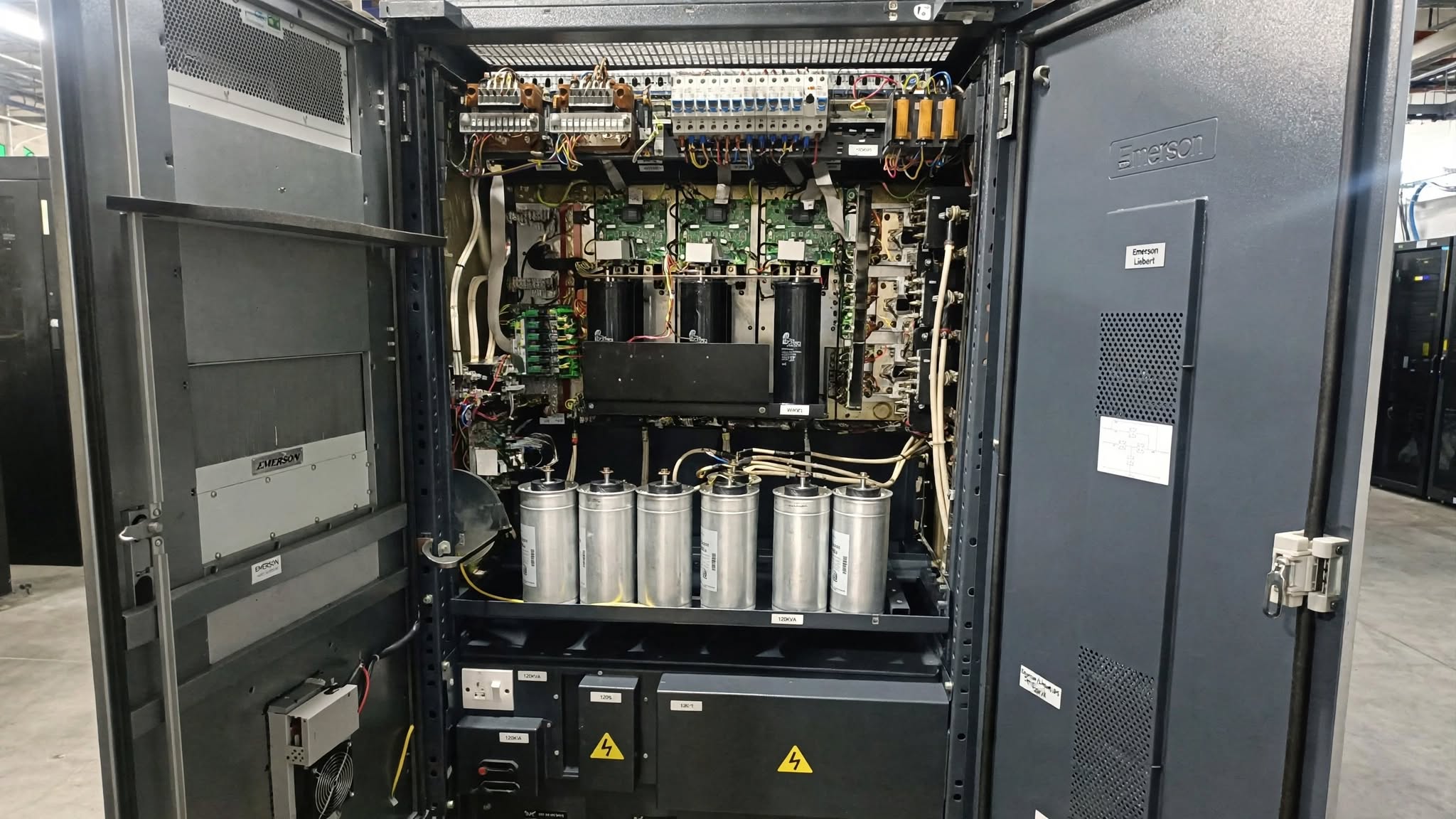
AC/DC Capacitors Aging Effects in UPS systems:
Capacitors are one of the most common failure components inside double conversion
UPS systems. Their aging directly impacts reliability, runtime, and power quality.
1- DC Capacitors (DC Bus / Bulk Capacitors)
Where They Are Used
• DC link between rectifier and inverter
• DC bus capacitors smooth the rectified waveform
• Battery interface stage
• Inside inverter modules and booster section
Usually electrolytic capacitors (large cylindrical cans).
Aging Mechanism
DC capacitors age mainly due to:
• Heat (primary factor)
• Ripple current stress
• Electrolyte drying out over the time
• Chemical degradation of dielectric
Every 10°C temperature increase roughly halves capacitor life
What Happens as DC capacitors Age?
Parameter Effect of Aging UPS Impact
Capacitance Decreases Higher DC ripple
ESR (Equivalent Series Resistance) Increases Overheating & stress
Ripple handling Reduces Possible inverter instability
Leakage current Increases Efficiency loss
Symptoms of old DC caps in UPS:
• Increased DC bus ripple
• Increased switching losses and IGBT thermal stress
• Inverter instability and intermittent issues
• Bus voltage dips then Control loop struggles
• Audible humming
• Over-temperature alarms
• Random shutdown under load
• Visible bulging or leakage
If ignored → can cause IGBT failure in the inverter stage
2- AC Capacitors (Output / Filter Capacitors)
Where They Are Used
• Output LC filters to modulating PWM signal
• EMI suppression
• Power factor correction
• Rectifier Input passive Harmonic filtering
Usually film capacitors (box-type).
Aging Mechanism
AC capacitors age due to:
• High voltage stress
• Thermal cycling
• Large Harmonic currents
• Dielectric breakdown over time
Film capacitors generally last longer than electrolytics.
What Happens as They Age?
Parameter Effect UPS Impact
Capacitance Slight reduction Filter tuning shift
Dissipation factor Increases More heating
Insulation resistance Drops Possible fault
Dielectric integrity Weakens Risk of catastrophic failure
Power Quality Distortion Voltage and current Increase output THDv and input THDi
Symptoms in UPS
• Increased output voltage Distortion
• Out put voltage Phase angle deviation
• Reduced power quality
• Nuisance alarms
• Blown filter stage
• Rarely: explosive failure (in severe cases)
AC vs DC Capacitor Aging Comparison
Factor DC Capacitors AC Capacitors
Type Electrolytic Film
Life Expectancy 6–10 years typical 8–10 years typical
Most Sensitive To Heat & ripple Voltage & harmonics
Failure Mode Gradual degradation Often sudden
Risk Level High (affects inverter directly) Medium (affects filtering)
Real-World UPS Impact
In industrial UPS systems:
• AC/DC capacitor aging is a major cause of inverter failure
• AC capacitor aging affects power quality more than system survival
• Capacitors usually determine the mid-life overhaul cycle of a UPS
Many manufacturers recommend:
• Capacitor inspection at year 3–5
• Proactive replacement at year 7–10
• Thermal scanning & ESR testing during PM
How to Monitor Capacitor Aging
Professional methods include:
• ESR measurement
• Ripple current measurement
• Infrared thermography
• DC bus ripple scope analysis
• Capacitance testing during shutdown
Strategic Insight for UPS Operators
If you are managing critical facilities:
• Capacitors age faster in hot electrical rooms
• Light load does NOT mean low stress (ripple can still be high)
• Poor airflow dramatically accelerates failure
• Capacitor replacement is cheaper than inverter module replacement
Last words:
Proactively monitor temperature, ripple voltage, and perform regular visual inspections,
replacing DC bus capacitors at mid-life to minimize inverter stress and prevent unexpected
failures.
Periodically evaluate AC capacitors for harmonic and voltage stress to preserve filter
performance, ensure proper unit operation, and maintain overall power quality
.png)


