
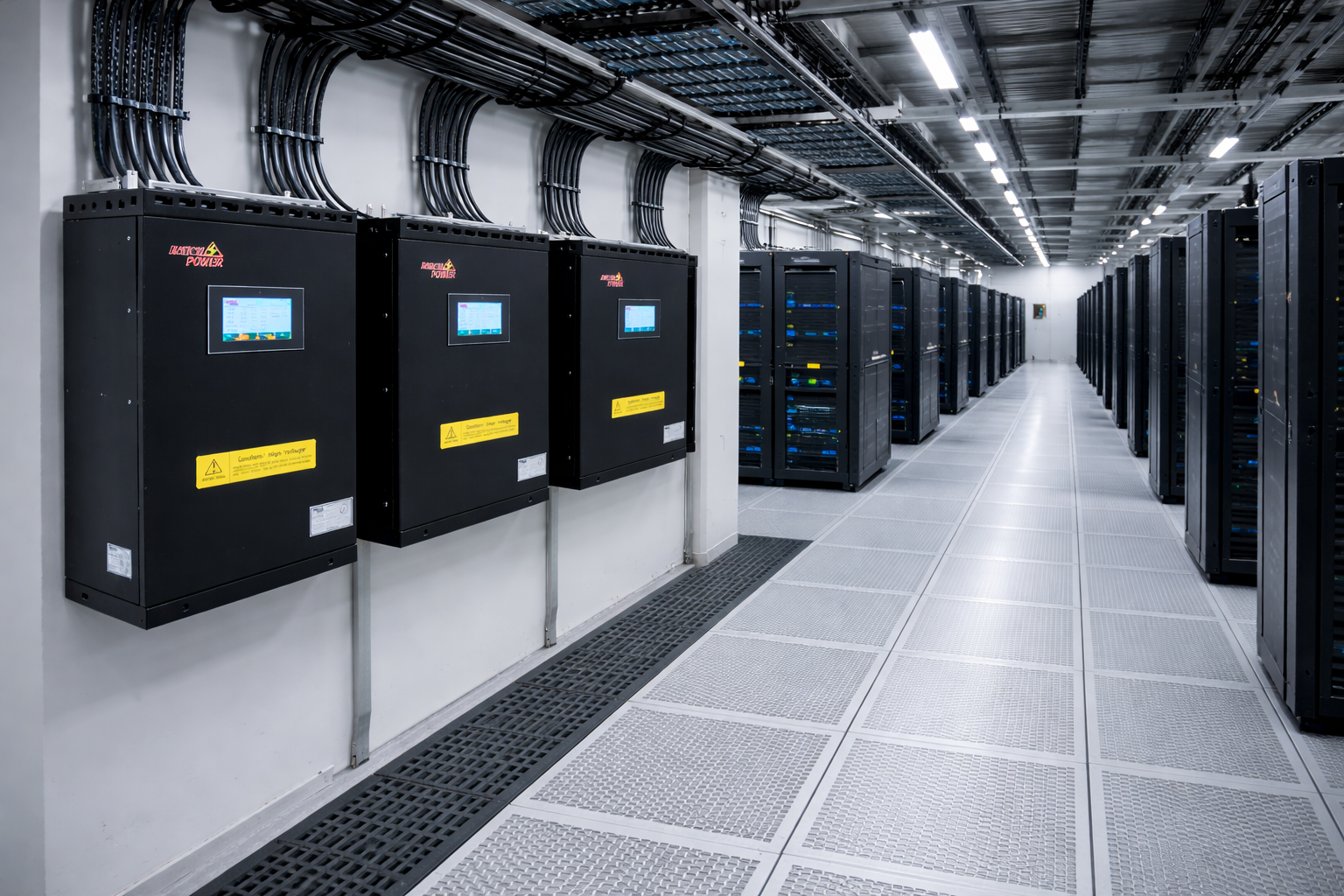
Modern data centers host multiple, independent harmonic sources, not only from IT equipment but also from mission-critical cooling infrastructure. A Multi-Layer Active Harmonic Mitigation (ML-AHM) strategy is required to address harmonics at their origin, at aggregation points, and at major non-linear infrastructure interfaces.
_________________________________________________________________________________________________________________
1. Harmonics Originate from Both IT and Mechanical Systems
Data center harmonics are generated by:
Electrical / IT Systems
· Server power supplies (SMPS)
· High-density server racks
· PDUs and branch circuits
· UPS rectifiers and inverters
Mechanical / Cooling Systems
· Variable Frequency Drives (VFDs) for:
· CRAC / CRAH units
· Chillers
· Cooling towers
· Pumps and large air-handling units (AHUs)
· EC fans and inverter-driven compressors
VFD-based HVAC loads generate 5th, 7th, 11th, and higher-order harmonics, often continuously and independent of IT load profiles.
A single harmonic filter location cannot effectively address both dynamic IT harmonics and steady HVAC harmonics.
_________________________________________________________________________________________________________________
2. Source-Level AHF at Server Racks and PDUs
Installing AHFs at rack-level or PDU-level:
· Prevents server-generated harmonics from:
· Propagating to adjacent racks
· Accumulating in PDUs
· Overheating neutrals and busbars
· Improves voltage quality feeding sensitive IT equipment
· Stabilizes power quality during rapid load swings (AI, HPC, cloud bursts)
This layer isolates IT harmonics at the point of generation.
_________________________________________________________________________________________________________________
3. HVAC / VFD-Level Harmonic Mitigation
VFD-driven cooling systems operate 24/7 and inject harmonics directly into the mechanical power distribution.
Deploying AHFs at:
· Chiller switchboards
· Mechanical distribution panels
· Large VFD feeders
Provides:
· Reduced transformer and cable heating
· Improved VFD performance and reliability
· Lower total harmonic voltage distortion (THDv) affecting control electronics
· Prevention of harmonic interaction between HVAC and IT power systems
This is critical because cooling availability = data center availability.
_________________________________________________________________________________________________________________
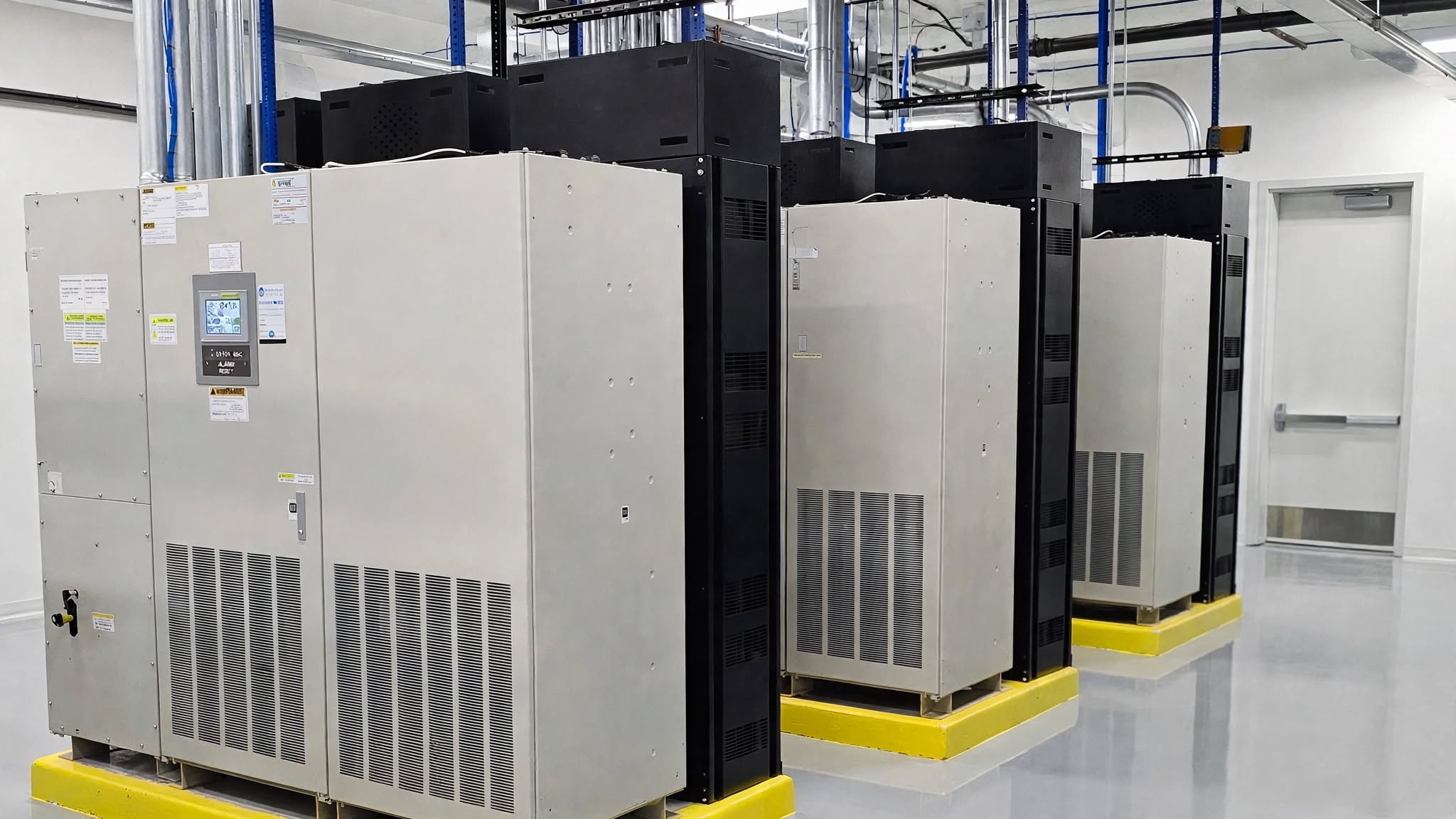
4. UPS-Level AHF Protects Upstream Electrical Infrastructure
UPS rectifiers remain one of the largest harmonic contributors.
Installing AHFs between UPS input and upstream panels:
· Eliminates rectifier-induced harmonics
· Protects generators from harmonic torque pulsations
· Improves upstream power factor
· Prevents harmonic amplification with VFDs during generator operation
This layer ensures a clean interface to utility and standby power sources.
___________________________________________________________________________________
5. Prevents Harmonic Interaction Between Systems
Without multi-layer mitigation:
· VFD harmonics can distort UPS input waveforms
· UPS harmonics can affect HVAC controls
· Generator-UPS-VFD interactions can cause:
· Overheating
· Nuisance trips
· Control instability
Multi-layer AHF deployment decouples harmonic sources, preventing cross-system interference.
____________________________________________________________________________________
6. Improved Redundancy, Reliability, and Maintainability
Distributed harmonic mitigation:
· Eliminates single points of failure
· Allows independent maintenance of IT, HVAC, or UPS AHFs
· Maintains power quality during partial system outages
· Supports phased expansion of IT or cooling capacity
This aligns with Tier III / Tier IV design philosophies.
_____________________________________________________________________________________
7. Energy Efficiency and Lower Operating Costs
Harmonics increase:
· I²R losses
· Transformer derating
· Cooling demand
Multi-layer AHF systems:
· Reduce losses in electrical and mechanical systems
· Improve overall system efficiency
· Lower operational stress on cooling equipment
· Improve PUE and long-term asset life
_____________________________________________________________________________________
8. Standards Compliance and Utility Acceptance
Multi-layer mitigation simplifies compliance with:
· IEEE-519
· Utility interconnection limits
· Generator manufacturer harmonic limits
· Colocation power quality SLAs
Compliance is maintained locally (HVAC, racks) and globally (PCC).
_____________________________________________________________________________________
Executive Summary Statement
Multi-Layer Active Harmonic Mitigation is essential in modern data centers to address harmonics generated by IT loads, UPS systems, and VFD-driven cooling infrastructure. By filtering harmonics at the rack, mechanical, and UPS levels, this approach prevents harmonic propagation, eliminates system interactions, protects both electrical and HVAC assets, and ensures scalable, high-reliability power quality for mission-critical facilities.
.png)


