
.png)
How Hatch Power Active Harmonic Filters Protect Data Centers and Critical Facilities
Modern data centers, industrial plants, and commercial buildings are packed with nonlinear, electronically controlled loads: UPS rectifiers, server power supplies, VFD-driven chillers and pumps, LED lighting, and more. These loads keep operations efficient and flexible—but they also inject significant harmonic distortion into the power system.
Harmonics rarely cause a dramatic failure overnight. Instead, they quietly erode capacity, increase losses, and accelerate aging of critical assets. In a data center, that translates into higher PUE, more stress on UPS and transformers, and a much smaller margin before something trips, reboots, or goes offline.
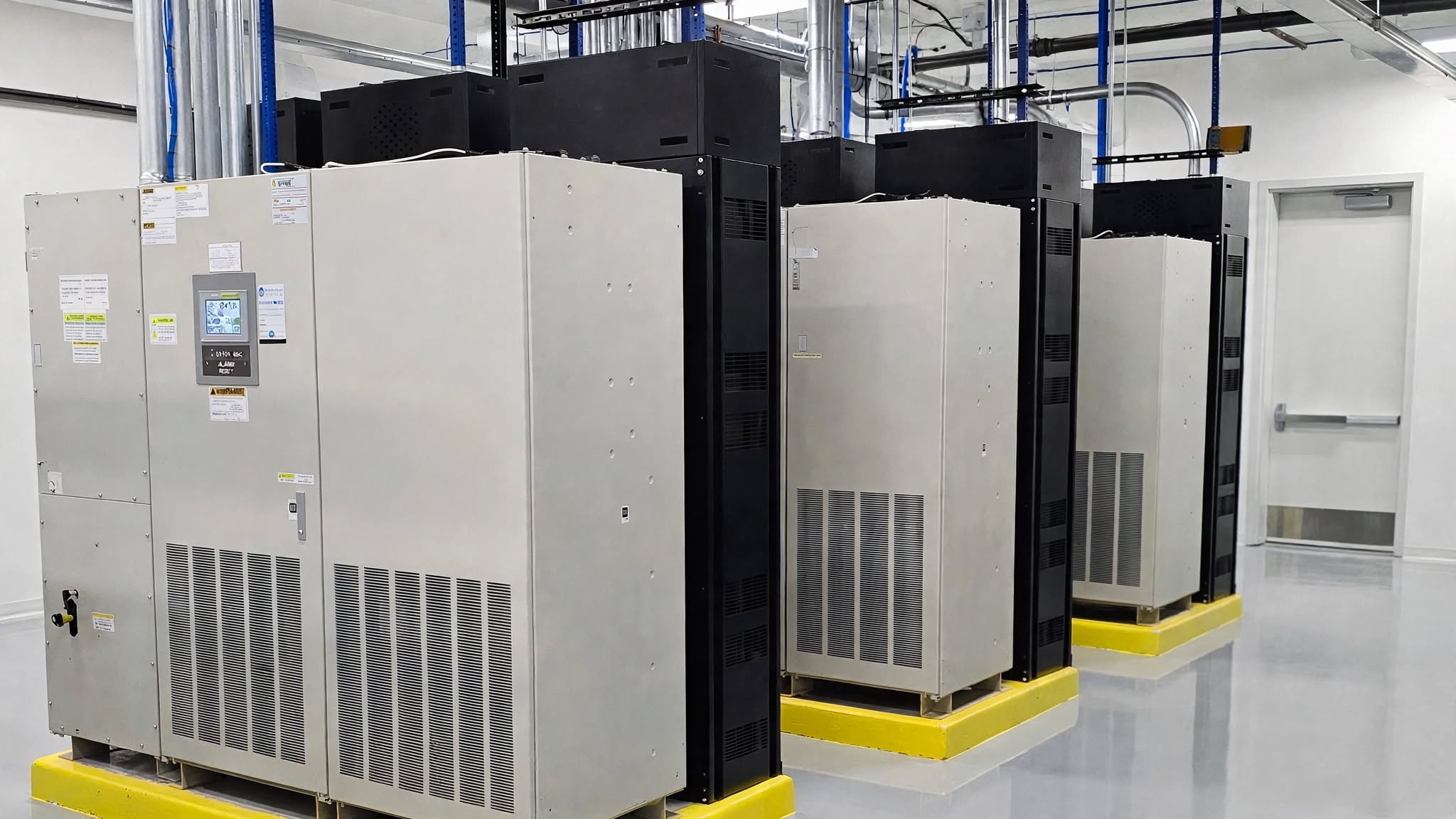
Hatch Power Active Harmonic Filters (AHF) are designed specifically to attack this problem at its roots—both before the UPS (on the utility/generator side) and after the UPS (on the critical IT bus).
___________________________________________________________________________________________________________________________
1. Harmonics: The Hidden Stress Behind Power Quality Problems
The power quality issues seen in data centers—voltage sags, swells, transients, harmonic distortion, imbalance, flicker, and nuisance trips—are interrelated. Harmonic currents are a major amplifier of these problems:
· They inflate RMS current, making transformers, generators, and feeders appear more heavily loaded than they should be for the real power delivered.
· They heat up cables, busbars, and neutrals, driving insulation stress and reducing equipment life.
· They distort the voltage waveform (THDv), directly affecting sensitive IT power supplies, control electronics, and protection devices.
· They exacerbate voltage drops and flicker, making sags and disturbances more severe when large loads start or transfer.
If a data center is dealing with unexplained breaker trips, hot panels, neutral overheating, or difficulty meeting IEEE 519 limits, harmonic distortion is almost always part of the story.
This is exactly where Hatch Power Active Harmonic Filters deliver value.
___________________________________________________________________________________________________________________________
2. Where Harmonics Really Come from in a Data Center Power Chain
In a real facility, harmonics come from multiple stages of the power chain—from the grid/generator side feeding the UPS and mechanical systems, and from the dense cluster of IT loads after the UPS.
2.1 Upstream of the UPS: Utility / Generator and Mechanical Systems
On the input side of the UPS, key harmonic sources include:
· Double-conversion UPS rectifiers (6-pulse / 12-pulse front ends)
· Battery chargers and DC power systems connected on the AC side
· Cooling and mechanical systems, typically NOT on the UPS but on the utility/generator-fed mechanical bus:
o VFD-driven chillers
o VFD pumps (chilled water, condenser water)
o VFD cooling tower fans
· Building services and lighting, such as LED lighting with electronic drivers and various SMPS-based control loads
All of these are supplied directly from the grid or standby generator, not through the UPS. They pollute the current drawn from the utility/generator, increasing THDi and stressing transformers, switchgear, and the point of common coupling (PCC).
2.2 After the UPS: The Critical IT Bus (Downstream Loads)
On the UPS output / critical load side, the dominant harmonic sources are the IT loads themselves:
· Server and storage power supplies (SMPS)
o Every rack server, blade chassis, storage array, and hyperconverged node uses a rectifier-based switch-mode power supply.
o These draw highly nonlinear current and generate strong 3rd, 5th, 7th, 11th, 13th… harmonic components.
· Network and telecom equipment
o Routers, switches, firewalls, security appliances, and telecom shelves, all powered by SMPS.
o Individually small but, across hundreds of racks, they form a large nonlinear load block.
· Rack PDUs and metered strips
o Internal electronics, metering, and DC supplies add more nonlinear content at the rack level.
· AC-fed rectifier shelves for -48 V DC systems, where present
o These rectifiers inject harmonics on the AC side feeding the DC plant.
Because all of these are concentrated downstream of the UPS, the UPS output bus, PDUs, RPPs, and branch circuits can see:
· Very high THDi at the IT distribution level
· Heavy triplen harmonics (3rd, 9th, etc.) summing in the neutral in 120/208 V systems
· Elevated neutral currents and neutral overheating
· Increased RMS current in feeders and busways, consuming capacity that should be available for real kW
A high-quality UPS delivers a clean sinusoidal voltage, but it does not eliminate the harmonic currents created by those nonlinear IT loads. Those harmonics appear on the UPS output side and must be mitigated there.
___________________________________________________________________________________________________________________________
3. How Hatch Power Active Harmonic Filters Work
Unlike passive filters that rely on fixed L-C tuning, Hatch Power Active Harmonic Filters are fully electronic and dynamic:
1. Real-Time Measurement
The AHF continuously measures phase currents (and, optionally, voltages) and decomposes them into fundamental and harmonic components.
2. Harmonic Signature Calculation
It identifies the magnitude and phase angle of key harmonic orders—3rd, 5th, 7th, 11th, 13th, etc.—including zero-sequence components that create neutral issues.
3. Compensating Current Injection
Through a power electronic converter, the AHF injects currents that are equal in magnitude and opposite in phase to the measured harmonics. As a result, the upstream system (transformers, generator, UPS input, or PDU feed) sees near-sinusoidal current.
4. Optional Reactive Power & Phase Support
Hatch Power AHF systems can also supply or absorb reactive power, improving displacement power factor and helping with small current imbalances.
Because this happens continuously and extremely fast (sub-cycle response), the filter adapts as IT loads move, as cooling plant loading changes, and as the data center evolves over time.
___________________________________________________________________________________________________________________________
4. Targeting Harmonics Before the UPS and After the UPS
A major advantage of an active solution is that it can be placed where it provides the highest technical and financial impact.
4.1 On the Utility / Generator Side (Before the UPS)
Placing an AHF on the main LV switchboard, mechanical MCCs, or UPS input allows it to clean up harmonics from:
· UPS rectifiers
· Battery chargers and DC power systems
· Cooling systems and VFDs (chillers, pumps, cooling tower fans) that are fed directly from the grid or generator, not from the UPS
· LED lighting and other building services
Benefits:
· Reduces harmonic currents drawn from the utility and generator, helping comply with IEEE 519 / IEC 61000 limits at the PCC.
· Protects MV/LV transformers from overheating and frees up kVA capacity.
· Keeps generator voltage, AVR, and governor more stable under nonlinear loading.
This is ideal where utility penalties, transformer loading, or generator performance are key concerns.
4.2 On the UPS Output / IT Distribution (After the UPS)
To directly address the harmonics created by IT loads after the UPS, an AHF can be installed:
· On the UPS output bus, covering large blocks of critical load.
· On critical PDUs or RPPs feeding dense racks, specific aisles, or high-density zones.
Benefits:
· Reduces THDi in feeders supplying server racks, storage arrays, and network gear.
· Lowers neutral current by compensating triplen harmonics from single-phase IT loads on 120/208 V systems.
· Decreases thermal stress in busways, panelboards, and cable bundles under raised floors or overhead trays.
· Minimizes voltage distortion right at the outlets feeding SMPS, improving stability of IT power supplies and reducing unexplained resets or lockups.
This post-UPS filtering directly protects the infrastructure that matters most: the racks, storage, and network gear that carry your data and services.
___________________________________________________________________________________________________________________________
5. Linking AHF Performance to the PQ Issues in Data Centers
Relating back to the power quality issues:
5.1 Harmonic Distortion (THDi / THDv)
· Upstream and downstream harmonics are reduced, cutting THDi at the utility/generator terminals, at the UPS input, and at the IT distribution level.
· Lower harmonic currents mean less voltage waveform distortion (THDv), protecting sensitive SMPS, PLCs, and controls.
5.2 Reduced System Capacity and Higher PUE
· By eliminating the “wasted” VA associated with harmonics, the same transformers, generators, and busways can carry more real kW for IT load.
· Lower I²R losses in cables and neutrals reduce heat, which directly cuts cooling demand and supports a lower PUE.
5.3 Thermal Stress & Neutral Overheating
· Harmonic cancellation reduces copper losses in feeders, panels, and busbars on both the mechanical and IT sides.
· Neutral currents driven by 3rd harmonics from downstream IT loads are significantly reduced, mitigating neutral overheating in 120/208 V systems.
5.4 Nuisance Trips, Flicker, and Sags Magnification
· With harmonics under control, voltage drop and flicker during large motor starts or load transfers (on the mechanical bus) are less severe.
· Protection devices, UPS bypass logic, and breaker trip units see cleaner waveforms and more stable RMS values, reducing nuisance operations.
5.5 Regulatory Compliance
· System-level THDi reduction helps the facility remain within harmonic emission limits, supporting compliance with IEEE 519 and related PQ guidelines.
· For sites with strict interconnection agreements or utility PQ audits, this is a major risk reducer.
___________________________________________________________________________________________________________________________
6. Beyond Data Centers: Industrial and Commercial Sites
While this article focuses on data centers, the same concepts apply to industrial and commercial facilities:
· Industrial loads: VFD-driven motors, welders, rectifiers, furnaces, and process drives.
· Commercial buildings: VFD elevators, escalators, large HVAC fans, LED lighting, EV chargers, and building automation systems.
Hatch Power AHF can be deployed at MCCs, main LV boards, or critical feeders to:
· Stabilize process lines and reduce random VFD or PLC trips.
· Extend the life of motors, drives, transformers, and switchgear.
· Improve power factor and release transformer/generator capacity.
___________________________________________________________________________________________________________________________
7. The Hatch Power Approach
Harmonic mitigation is most effective when it’s part of an integrated power quality strategy. Hatch Power supports you through:
· Power quality surveys and logging (THD, flicker, sags/swells, event recording)
· Engineering studies to locate harmonic sources before and after the UPS, and to size/place AHFs for maximum impact
· Turnkey installation, commissioning, and integration with existing UPS, generator, and DCIM systems
· Service and maintenance to keep filters tuned to the site’s evolving load profile
___________________________________________________________________________________________________________________________
Conclusion
Power quality disturbances in data centers and critical facilities are multifaceted and interdependent. Harmonic distortion—from UPS rectifiers and cooling/VFD systems on the grid/generator side and from dense clusters of IT loads after the UPS—is a central driver behind overheating, reduced capacity, flicker, nuisance trips, and compliance challenges.
Hatch Power Active Harmonic Filters directly address both sides of this problem:
· Cleaning up the current drawn from the utility/generator and mechanical bus
· Filtering the heavy nonlinear IT loads downstream of the UPS
· Reducing THDi, freeing capacity, lowering thermal stress, and stabilizing voltage for mission-critical equipment
For operators who cannot afford unplanned downtime, lost capacity, or creeping thermal risk, Hatch Power AHF is not just an accessory—it is a strategic power quality asset that protects infrastructure, uptime, and long-term ROI.
.png)


